

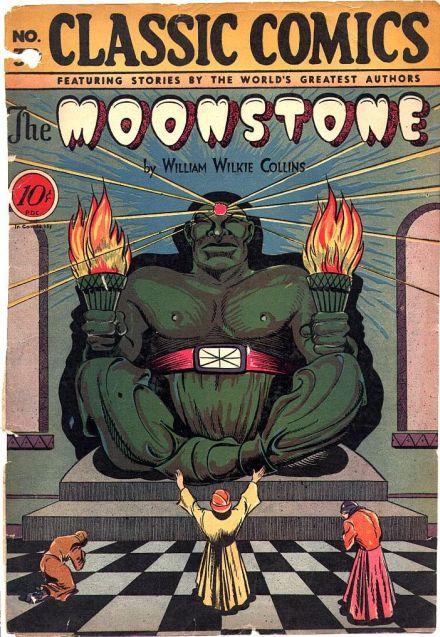
 Last year, while spending a month in my hometown in central India and going through my old library, I picked up a much yellowed edition of a novel that I had been vaguely aware of as a pioneering work of British detective fiction but actually knew nothing about—The Moonstone(1868) by Wilkie Collins. I had bought it at a second-hand bookstore as a teenager and never opened it.
When I finally got to read it, I was amazed to discover that the plot began with a reference to a real event of 1799 known as the “Storming of Seringapatam”. I encountered the names of the cities “Somnauth” and “Benares”, the historical figures “Mahmoud of Ghizni” and “Tippoo Sultan”, and descriptions of tensions between the “Hindoos” and “Mohammedans”. The fictional “moonstone” of the title was, in fact, a diamond looted from an Indian temple by a corrupt British officer named John Herncastle. It carries a sinister reputation for bringing misfortune to whoever possesses it. The gem is bequeathed to Herncastle’s niece, Rachel Verinder, for her 18th birthday. That very night, while tucked away in her bedroom at an English country estate, the jewel vanishes. Its disappearance sparks a chaotic and sweeping investigation that exposes hidden family secrets, local scandals and drug dependency. Meanwhile, three dedicated Hindu priests disguised as jugglers shadow the family, determined to reclaim the sacred artefact for their shrine.
A major theme in the novel is the intrusion of imperialism on everyday English life, the disruption of local peace and order by colonial events far away. Restoration is only possible when the diamond is returned and installed in its original environment.
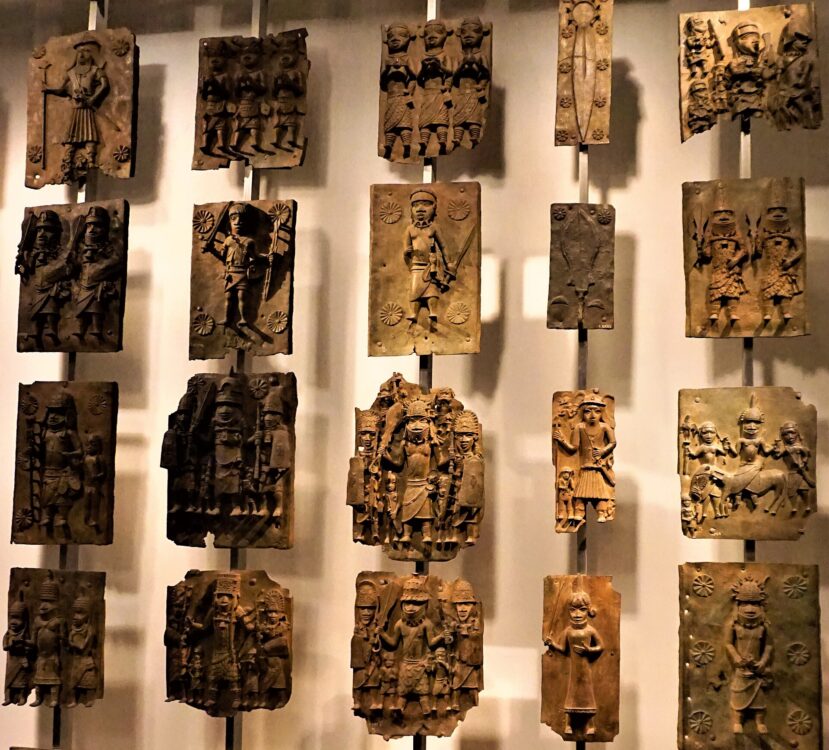
The plot stood out to me because I had come across several news stories of “stolen” artworks and artefacts. Some had been returned. For example, the Benin Bronzes of Nigeria, which the British took in 1897, were sent back by London’s Horniman Museum to Benin City in 2023 to be displayed at the new Edo Museum of West African Art. Also, the Piprahwa Gems associated with the Buddha. These sacred jewels, which had been unearthed in 1898 by English estate manager William Claxton Peppé at a stupa site in northern India, were handed over by Sotheby’s to a Mumbai-based conglomerate in 2025 after diplomatic intervention and pressure from global Buddhist leaders. Peppé’s family maintained that they had tried to donate the relics to monasteries, but the attempts had been unproductive—and there seemed to be no choice other than an auction.
Other artworks and artefacts are in the news for still being withheld by former colonial powers. For instance, Dr. Zahi Hawass—renowned Egyptian archaeologist and former Minister of State for Antiquities Affairs of Egypt—has added a petition link on his Instagram page for the return of the Rosetta Stone (at the British Museum) and the Dendera Zodiac (at the Louvre) to Egypt.
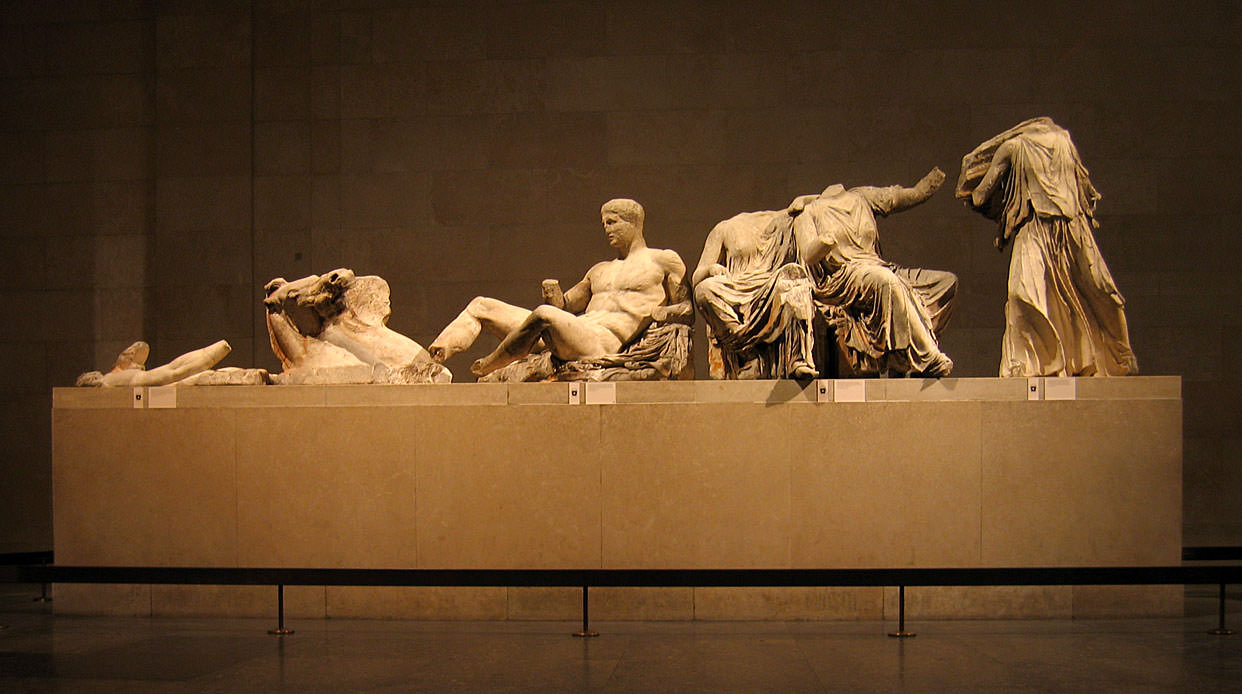
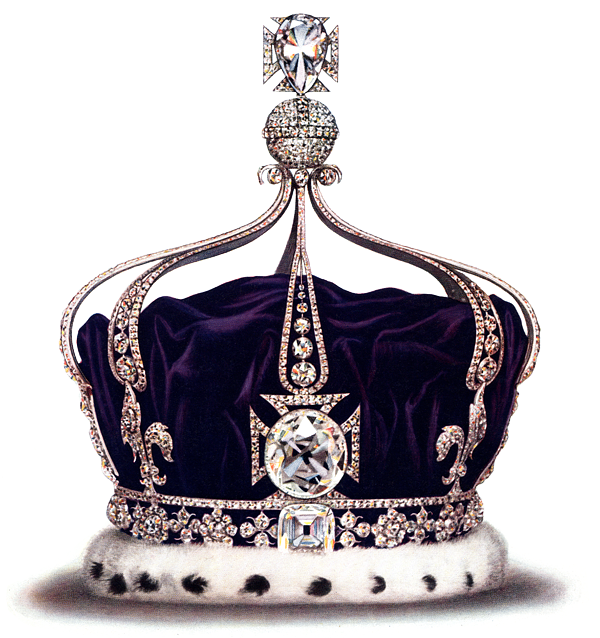
There are also heated debates on the situations in which these works were acquired—whether stolen/forcibly taken or gifted or something else. Take the Parthenon or Elgin marbles(removed in the early 19th century by the British while Greece was part of the Ottoman Empire) and the Kohinoor diamond (reached Queen Victoria in the 19th century after changing various hands through empires in south and west Asia). Regarding the former, the Trustees of the British Museum have stated: “Lord Elgin, the British diplomat who transported the sculptures to England, acted with the full knowledge and permission of the legal authorities of the day in both Athens and London. Lord Elgin’s activities were thoroughly investigated by a Parliamentary Select Committee in 1816 and found to be entirely legal. Following a vote of Parliament, the British Museum was allocated funds to acquire the collection.”
Regarding the latter, a BBC article mentions: “The stone was originally found in India’s Golconda mines and measured 186 carats when it was eventually handed to the British in 1849 under the terms of a punitive treaty following the Anglo-Sikh war. It was signed by the 10-year-old Sikh ruler after his mother was thrown in jail.” But the Indian Supreme Court has said that the diamond “was not purloined”. I discovered that the First and Second Anglo-Sikh Wars (1845–1849) were ultimately lost due to the calculated betrayals of key Sikh Empire nobles, notably Prime Minister Raja Lal Singh and Commander-in-Chief Raja Tej Singh. Their deliberate sabotage of the Khalsa Army of Sikh warriors paved the way for the British annexation of Punjab, in northern India—and that’s how the Kohinoor ended up in Britain.
As we see, history is complex. One imperial force competing with another imperial force on a third territory, as well as the presence of traitors in a kingdom conquered by a colonial power complicates matters. In such contexts, it is hard to come up with a rigid oppressor/oppressed distinction and fix as to where and under whom a precious artwork or artefact would have remained safe and secure. The collision of art and politics in history is often without clear right or wrong.
Also, to understand the events of the past, we must pay attention to the circumstances and conditions prevalent then. The codes that seem normal and expected to us now as to how nation states should conduct themselves are results of recent developments in international law, that were not enforced in previous centuries.
For these reasons, when I think of the issue of repatriation, I avoid the lens of polarisation that infects our political discourse today. Instead, I take into account the historical territorial boundaries, forms of governance, archaeological and museographical capabilities, and more. Was the piece excavated by the colonial power with the help of technology that was absent in the local culture? (in this case we can be less harsh in our assessments as there can be ambiguity regarding what was legal or illegal then). Was the piece already “out there” in the local culture when it was acquired? (here we have to be careful and see whether it was a result of voluntary exchange or coercion, and judge accordingly).
Did the culture from which the artwork/artefact originates have an environment stable and advanced enough to preserve that piece when it was acquired? In the case of civil tensions and lack of good local governance, a colonial power acting as a custodian does not seem all that objectionable to me. (For instance, the Ottomans were known to have occasionally ground up classical marble statues and architectural fragments in Greece to produce lime for mortar. In such a context, the Parthenon marbles being safe in Britain seems a reasonable option.)
It would be ethical, though, for a former colonial power to attempt to return a precious work (if it was not gifted) to an appropriate authority in a former colony if it emerges, as the descendants of William Claxton Peppé have done, after a long period has passed, and political chaos settled. Imperial injustices and trauma related to creative and cultural history can only be solved through nuanced negotiations—for which the former colonies would have to step up in an organised manner, marshal and display capabilities for custodianship that are on a par with the former colonial power, while making prudent appeals to their conscience.
Written by Tulika Bahadur